
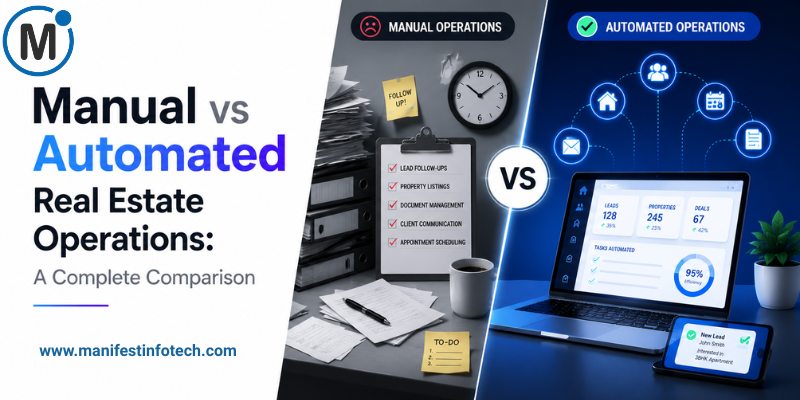
The real estate industry is evolving rapidly, and technology is changing how businesses manage leads, sales, and customer relationships. While many agencies still rely on manual processes, automation is helping real estate businesses improve efficiency, reduce costs, and increase conversions. Let’s compare both approaches in detail.
𝟭. 𝗟𝗲𝗮𝗱 𝗠𝗮𝗻𝗮𝗴𝗲𝗺𝗲𝗻𝘁
𝗠𝗮𝗻𝘂𝗮𝗹 𝗢𝗽𝗲𝗿𝗮𝘁𝗶𝗼𝗻𝘀
Leads are collected through calls, emails, spreadsheets, and notebooks. Sales teams manually assign and track prospects, increasing the risk of missed opportunities.
𝗔𝘂𝘁𝗼𝗺𝗮𝘁𝗲𝗱 𝗢𝗽𝗲𝗿𝗮𝘁𝗶𝗼𝗻𝘀
AI-powered systems automatically capture leads from websites, social media, and property portals. Leads are categorized, scored, and assigned instantly to the appropriate sales representative.
𝟮. 𝗙𝗼𝗹𝗹𝗼𝘄-𝗨𝗽 𝗣𝗿𝗼𝗰𝗲𝘀𝘀
𝗠𝗮𝗻𝘂𝗮𝗹 𝗢𝗽𝗲𝗿𝗮𝘁𝗶𝗼𝗻𝘀
Agents must remember to call or email prospects, which often results in delayed or missed follow-ups.
𝗔𝘂𝘁𝗼𝗺𝗮𝘁𝗲𝗱 𝗢𝗽𝗲𝗿𝗮𝘁𝗶𝗼𝗻𝘀
Automated workflows send instant responses, reminders, and nurturing campaigns, ensuring every lead receives timely attention.
𝟯. 𝗗𝗮𝘁𝗮 𝗠𝗮𝗻𝗮𝗴𝗲𝗺𝗲𝗻𝘁
𝗠𝗮𝗻𝘂𝗮𝗹 𝗢𝗽𝗲𝗿𝗮𝘁𝗶𝗼𝗻𝘀
Customer information is stored across spreadsheets and multiple systems, making data retrieval difficult.
𝗔𝘂𝘁𝗼𝗺𝗮𝘁𝗲𝗱 𝗢𝗽𝗲𝗿𝗮𝘁𝗶𝗼𝗻𝘀
A centralized CRM stores and organizes all customer interactions, property preferences, and communication history in one place.
𝟰. 𝗖𝘂𝘀𝘁𝗼𝗺𝗲𝗿 𝗖𝗼𝗺𝗺𝘂𝗻𝗶𝗰𝗮𝘁𝗶𝗼𝗻
𝗠𝗮𝗻𝘂𝗮𝗹 𝗢𝗽𝗲𝗿𝗮𝘁𝗶𝗼𝗻𝘀
Communication depends on individual agents, leading to inconsistencies in customer experience.
𝗔𝘂𝘁𝗼𝗺𝗮𝘁𝗲𝗱 𝗢𝗽𝗲𝗿𝗮𝘁𝗶𝗼𝗻𝘀
AI chatbots and automated messaging provide consistent, personalized communication 24/7.
𝟱. 𝗢𝗽𝗲𝗿𝗮𝘁𝗶𝗼𝗻𝗮𝗹 𝗘𝗳𝗳𝗶𝗰𝗶𝗲𝗻𝗰𝘆
𝗠𝗮𝗻𝘂𝗮𝗹 𝗢𝗽𝗲𝗿𝗮𝘁𝗶𝗼𝗻𝘀
Administrative tasks consume valuable time and reduce overall productivity.
𝗔𝘂𝘁𝗼𝗺𝗮𝘁𝗲𝗱 𝗢𝗽𝗲𝗿𝗮𝘁𝗶𝗼𝗻𝘀
Tasks such as appointment scheduling, reporting, and document management are automated, allowing teams to focus on sales.
𝟲. 𝗦𝗰𝗮𝗹𝗮𝗯𝗶𝗹𝗶𝘁𝘆
𝗠𝗮𝗻𝘂𝗮𝗹 𝗢𝗽𝗲𝗿𝗮𝘁𝗶𝗼𝗻𝘀
Growth requires hiring more staff and increasing operational resources.
𝗔𝘂𝘁𝗼𝗺𝗮𝘁𝗲𝗱 𝗢𝗽𝗲𝗿𝗮𝘁𝗶𝗼𝗻𝘀
Automation enables businesses to manage thousands of leads and transactions without significantly increasing costs.
𝟳. 𝗖𝗼𝘀𝘁 𝗜𝗺𝗽𝗮𝗰𝘁
𝗠𝗮𝗻𝘂𝗮𝗹 𝗢𝗽𝗲𝗿𝗮𝘁𝗶𝗼𝗻𝘀
Higher labor costs, administrative expenses, and inefficiencies impact profitability.
𝗔𝘂𝘁𝗼𝗺𝗮𝘁𝗲𝗱 𝗢𝗽𝗲𝗿𝗮𝘁𝗶𝗼𝗻𝘀
Reduced manual workload lowers operational costs while improving performance.
𝗖𝗼𝗻𝗰𝗹𝘂𝘀𝗶𝗼𝗻
Manual operations may work for small-scale businesses, but they become difficult to manage as growth accelerates. Automated real estate operations provide faster lead response times, better customer experiences, improved efficiency, and greater scalability. The future of real estate lies in combining human expertise with intelligent automation to maximize productivity and drive sustainable business growth.
If you are looking for any services related to Website Development, App Development, Digital Marketing and SEO, just email us at nchouksey@manifestinfotech.com
𝐅𝐨𝐥𝐥𝐨𝐰 𝐔𝐬:
𝐋𝐢𝐧𝐤𝐞𝐝𝐢𝐧: linkedin.com/company/manifestinfotech
𝐅𝐚𝐜𝐞𝐛𝐨𝐨𝐤: facebook.com/manifestinfotech/
𝐈𝐧𝐬𝐭𝐚𝐠𝐫𝐚𝐦: instagram.com/manifestinfotech/
𝐓𝐰𝐢𝐭𝐭𝐞𝐫: twitter.com/Manifest_info
#RealEstateAutomation #PropTech #RealEstateTechnology #AIRealEstate #AutomationInRealEstate #RealEstateCRM #LeadManagement #SalesAutomation #RealEstateSales #DigitalTransformation #AIForRealEstate #PropertyTechnology #SmartAutomation #RealEstateBusiness #LeadGeneration #CRMAutomation #BusinessAutomation #CustomerExperience #OperationalEfficiency #RealEstateGrowth #PropertyManagement #AIChatbots