
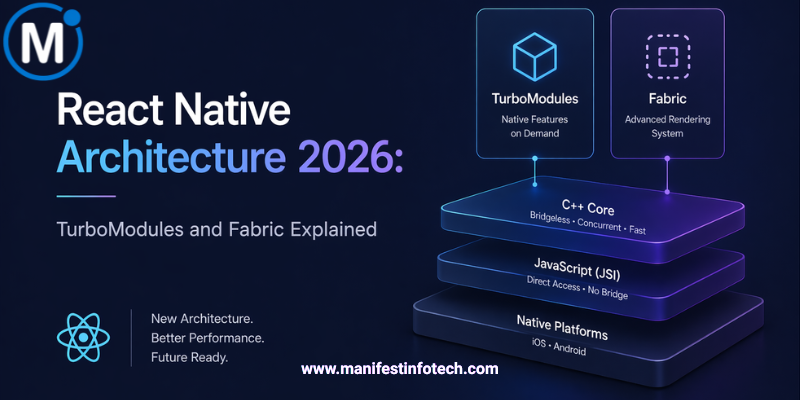
React Native has evolved rapidly over the years, and 2026 marks the maturity of its new architectural foundation. Two technologies—TurboModules and Fabric—now sit at the heart of modern React Native apps, offering faster performance, smoother animations, and tighter communication between JavaScript and native code. If you’re building apps today, understanding this architecture isn’t optional—it’s the key to getting the best performance out of React Native.
𝗪𝗵𝘆 𝗮 𝗡𝗲𝘄 𝗔𝗿𝗰𝗵𝗶𝘁𝗲𝗰𝘁𝘂𝗿𝗲?
The older React Native architecture relied on the “bridge”—a JSON-based asynchronous layer that connected JS and native modules. While powerful, it created bottlenecks:
- Extra serialization/deserialization
- Delayed UI updates
- Limited access to concurrent features
- Harder interaction between JS and native threads
TurboModules and Fabric replace the bridge with a faster, leaner system.
𝗪𝗵𝗮𝘁 𝗔𝗿𝗲 𝗧𝘂𝗿𝗯𝗼𝗠𝗼𝗱𝘂𝗹𝗲𝘀?
TurboModules modernize how React Native loads and communicates with native modules.
𝗞𝗲𝘆 𝗙𝗲𝗮𝘁𝘂𝗿𝗲𝘀:
𝟭. 𝗟𝗮𝘇𝘆 𝗟𝗼𝗮𝗱𝗶𝗻𝗴 𝗳𝗼𝗿 𝗙𝗮𝘀𝘁𝗲𝗿 𝗦𝘁𝗮𝗿𝘁𝘂𝗽
React Native no longer loads every module at app launch. Modules are loaded only when needed—reducing startup times significantly.
𝟮. 𝗝𝗦𝗜-𝗕𝗮𝘀𝗲𝗱 𝗖𝗼𝗺𝗺𝘂𝗻𝗶𝗰𝗮𝘁𝗶𝗼𝗻
TurboModules use JSI (JavaScript Interface), allowing JavaScript to call native code directly without serialization.
This means:
- Lower latency
- Faster function calls
- More efficient memory use
𝟯. 𝗧𝘆𝗽𝗲𝗱 𝗮𝗻𝗱 𝗣𝗿𝗲𝗱𝗶𝗰𝘁𝗮𝗯𝗹𝗲 𝗔𝗣𝗜𝘀
Thanks to codegen, your TypeScript/Flow definitions automatically create native bindings—removing the need for manual bridging.
𝗪𝗵𝗮𝘁 𝗜𝘀 𝗙𝗮𝗯𝗿𝗶𝗰?
Fabric is the new rendering system for React Native, replacing the old UI Manager.
𝗪𝗵𝘆 𝗙𝗮𝗯𝗿𝗶𝗰 𝗠𝗮𝘁𝘁𝗲𝗿𝘀:
- 𝗖𝗼𝗻𝗰𝘂𝗿𝗿𝗲𝗻𝘁 𝗥𝗲𝗻𝗱𝗲𝗿𝗶𝗻𝗴 using React 18
- 𝗙𝗮𝘀𝘁𝗲𝗿 𝗨𝗜 𝘂𝗽𝗱𝗮𝘁𝗲𝘀
- 𝗦𝗺𝗼𝗼𝘁𝗵𝗲𝗿 𝗮𝗻𝗶𝗺𝗮𝘁𝗶𝗼𝗻𝘀
- 𝗕𝗲𝘁𝘁𝗲𝗿 𝗴𝗲𝘀𝘁𝘂𝗿𝗲 𝗵𝗮𝗻𝗱𝗹𝗶𝗻𝗴
- 𝗠𝗼𝗿𝗲 𝗿𝗲𝗹𝗶𝗮𝗯𝗹𝗲 𝗹𝗮𝘆𝗼𝘂𝘁 𝘀𝘆𝘀𝘁𝗲𝗺
With Fabric, React Native’s UI is now fully aligned with modern React concepts.
𝗛𝗼𝘄 𝗙𝗮𝗯𝗿𝗶𝗰 𝗪𝗼𝗿𝗸𝘀
𝟭. 𝗦𝘆𝗻𝗰𝗵𝗿𝗼𝗻𝗼𝘂𝘀 𝗨𝗜 𝗨𝗽𝗱𝗮𝘁𝗲𝘀
Fabric enables JS and native threads to share memory structures, allowing more predictable and immediate UI changes.
𝟮. 𝗖𝗼𝗻𝗰𝘂𝗿𝗿𝗲𝗻𝘁 𝗠𝗼𝗱𝗲 𝗦𝘂𝗽𝗽𝗼𝗿𝘁
React 18 features like transitions and selective hydration now work properly on mobile.
𝟯. 𝗨𝗻𝗶𝗳𝗶𝗲𝗱 𝗥𝗲𝗻𝗱𝗲𝗿𝗲𝗿
The rendering pipeline is simplified, making it easier to build and maintain custom native components.
𝗛𝗼𝘄 𝗧𝘂𝗿𝗯𝗼𝗠𝗼𝗱𝘂𝗹𝗲𝘀 𝗮𝗻𝗱 𝗙𝗮𝗯𝗿𝗶𝗰 𝗪𝗼𝗿𝗸 𝗧𝗼𝗴𝗲𝘁𝗵𝗲𝗿
TurboModules handle logic and data access, Fabric handles rendering—both powered by JSI.
Together they:
- Remove the old bridge
- Improve performance dramatically
- Allow React Native to compete with fully native performance
- Make animations, gestures, and transitions feel buttery-smooth
This results in apps that start faster, run smoother, and behave more consistently across platforms.
𝗪𝗵𝗮𝘁 𝗧𝗵𝗶𝘀 𝗠𝗲𝗮𝗻𝘀 𝗳𝗼𝗿 𝗗𝗲𝘃𝗲𝗹𝗼𝗽𝗲𝗿𝘀 𝗶𝗻 𝟮𝟬𝟮6
- Better performance with less code
- Faster communication between layers
- More predictable UI rendering
- Cleaner native module development
- Future support for WebAssembly and multi-threaded JS runtimes
And the best part? Most apps automatically benefit by upgrading React Native—no full rewrite needed.
𝗙𝗶𝗻𝗮𝗹 𝗧𝗵𝗼𝘂𝗴𝗵𝘁𝘀
The React Native Architecture of 2026 represents a major leap forward. With 𝗧𝘂𝗿𝗯𝗼𝗠𝗼𝗱𝘂𝗹𝗲𝘀 enabling faster native calls and 𝗙𝗮𝗯𝗿𝗶𝗰 revolutionizing rendering, React Native is now more modern, efficient, and competitive than ever. If you’re building mobile apps today, understanding this architecture will help you unlock next-level performance and keep your apps future-ready.
If you are looking for any services related to Website Development, App Development, Digital Marketing and SEO, just email us at nchouksey@manifestinfotech.com
#ReactNative #TurboModules #FabricRenderer #ReactNativeArchitecture #MobileDevelopment #JavaScript #ReactNative2026 #JSI #CrossPlatformDevelopment #AppPerformance #ModernApps #FrontendEngineering #NativeModules #TechInnovation #MobileApps #JSDeveloper #DeveloperTips #PerformanceOptimization #ReactNativeCore #FutureOfMobile