
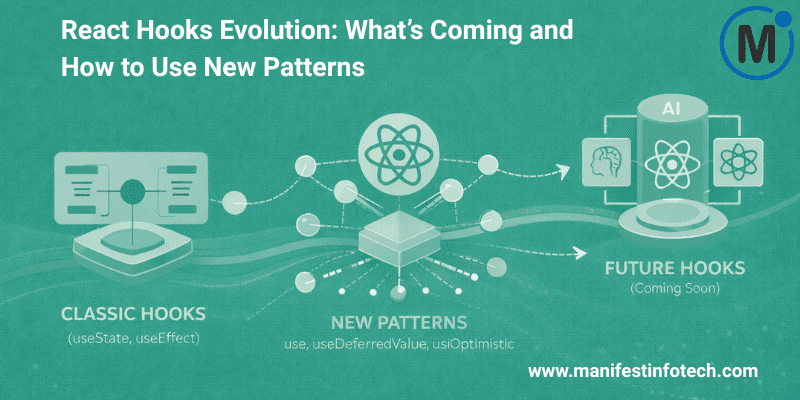
React Hooks have fundamentally changed how developers build React applications. Since their introduction, hooks have replaced many class-based patterns with simpler, more composable logic. As React continues to evolve, hooks are also maturing—bringing new patterns, better performance, and clearer mental models. In this post, we’ll explore what’s coming next in the evolution of React Hooks and how you can start using these modern patterns today.
𝗔 𝗤𝘂𝗶𝗰𝗸 𝗥𝗲𝗰𝗮𝗽: 𝗪𝗵𝘆 𝗛𝗼𝗼𝗸𝘀 𝗠𝗮𝘁𝘁𝗲𝗿
Hooks allow developers to use state, lifecycle logic, and side effects directly inside functional components. This made components easier to read, test, and reuse. Over time, hooks have become the default way of writing React, pushing class components into the background.
𝗪𝗵𝗮𝘁’𝘀 𝗖𝗵𝗮𝗻𝗴𝗶𝗻𝗴 𝗶𝗻 𝘁𝗵𝗲 𝗘𝘃𝗼𝗹𝘂𝘁𝗶𝗼𝗻 𝗼𝗳 𝗥𝗲𝗮𝗰𝘁 𝗛𝗼𝗼𝗸𝘀?
𝗖𝗹𝗲𝗮𝗻𝗲𝗿 𝗗𝗮𝘁𝗮 𝗙𝗲𝘁𝗰𝗵𝗶𝗻𝗴 𝗣𝗮𝘁𝘁𝗲𝗿𝗻𝘀
Modern React is moving away from heavy `useEffect`-based data fetching. New patterns focus on 𝗱𝗲𝗰𝗹𝗮𝗿𝗮𝘁𝗶𝘃𝗲 𝗱𝗮𝘁𝗮 𝗹𝗼𝗮𝗱𝗶𝗻𝗴, where data requirements are tied directly to components. This reduces boilerplate, avoids race conditions, and improves readability.
𝗛𝗼𝘄 𝘁𝗼 𝘂𝘀𝗲 𝗶𝘁:
Adopt frameworks and libraries that encourage colocated data fetching and caching. Think in terms of 𝘄𝗵𝗮𝘁 𝗱𝗮𝘁𝗮 𝗮 𝗰𝗼𝗺𝗽𝗼𝗻𝗲𝗻𝘁 𝗻𝗲𝗲𝗱𝘀, not 𝘄𝗵𝗲𝗻 𝘁𝗼 𝗳𝗲𝘁𝗰𝗵 𝗶𝘁
𝗘𝗺𝗽𝗵𝗮𝘀𝗶𝘀 𝗼𝗻 𝗦𝗲𝗿𝘃𝗲𝗿 𝗖𝗼𝗺𝗽𝗼𝗻𝗲𝗻𝘁𝘀 + 𝗛𝗼𝗼𝗸𝘀
With the rise of React Server Components, hooks are now being used differently on the server and client. Some hooks are client-only, while others work seamlessly on the server, helping reduce bundle size and improve performance.
𝗛𝗼𝘄 𝘁𝗼 𝘂𝘀𝗲 𝗶𝘁:
Split logic clearly between server and client components. Use hooks for interactivity on the client and rely on server-rendered logic for data-heavy operations.
𝟯. 𝗡𝗲𝘄 𝗖𝗼𝗻𝗰𝘂𝗿𝗿𝗲𝗻𝗰𝘆-𝗙𝗿𝗶𝗲𝗻𝗱𝗹𝘆 𝗣𝗮𝘁𝘁𝗲𝗿𝗻𝘀
React’s concurrent features have influenced how hooks behave. Patterns like transitions and deferred updates make UI interactions smoother, even in complex applications.
𝗛𝗼𝘄 𝘁𝗼 𝘂𝘀𝗲 𝗶𝘁:
Wrap non-urgent state updates in transition-based hooks so your app stays responsive during expensive renders.
𝟰. 𝗕𝗲𝘁𝘁𝗲𝗿 𝗦𝘁𝗮𝘁𝗲 𝗠𝗮𝗻𝗮𝗴𝗲𝗺𝗲𝗻𝘁 𝘄𝗶𝘁𝗵 𝗖𝘂𝘀𝘁𝗼𝗺 𝗛𝗼𝗼𝗸𝘀
Custom hooks are becoming the preferred way to share logic across components. Instead of large global state solutions, developers are favoring 𝘀𝗺𝗮𝗹𝗹, 𝗳𝗼𝗰𝘂𝘀𝗲𝗱 𝗵𝗼𝗼𝗸𝘀 that do one thing well.
𝗛𝗼𝘄 𝘁𝗼 𝘂𝘀𝗲 𝗶𝘁:
Extract repeated logic (forms, authentication, UI state) into reusable custom hooks. Keep them predictable and easy to compose.
𝟱. 𝗥𝗲𝗱𝘂𝗰𝗲𝗱 𝗦𝗶𝗱𝗲 𝗘𝗳𝗳𝗲𝗰𝘁𝘀, 𝗠𝗼𝗿𝗲 𝗣𝗿𝗲𝗱𝗶𝗰𝘁𝗮𝗯𝗶𝗹𝗶𝘁𝘆
The future of hooks encourages fewer side effects and more deterministic code. This means relying less on complex dependency arrays and more on well-structured logic.
𝗛𝗼𝘄 𝘁𝗼 𝘂𝘀𝗲 𝗶𝘁:
Avoid overloading `useEffect`. If logic feels complicated, consider whether it belongs in a custom hook or a different abstraction altogether.
𝗕𝗲𝘀𝘁 𝗣𝗿𝗮𝗰𝘁𝗶𝗰𝗲𝘀 𝘁𝗼 𝗔𝗱𝗼𝗽𝘁 𝗶𝗻 𝟮𝟬𝟮𝟲
* Prefer 𝗰𝘂𝘀𝘁𝗼𝗺 𝗵𝗼𝗼𝗸𝘀 over repeated logic
* Keep hooks 𝘀𝗺𝗮𝗹𝗹 𝗮𝗻𝗱 𝗳𝗼𝗰𝘂𝘀𝗲𝗱
* Avoid unnecessary side effects
* Embrace 𝘀𝗲𝗿𝘃𝗲𝗿 + 𝗰𝗹𝗶𝗲𝗻𝘁 𝘀𝗲𝗽𝗮𝗿𝗮𝘁𝗶𝗼𝗻
* Write hooks that are easy to test and reuse
𝗖𝗼𝗻𝗰𝗹𝘂𝘀𝗶𝗼𝗻
The evolution of React Hooks is all about simplicity, performance, and predictability. As new patterns emerge, developers are encouraged to think more declaratively, reduce side effects, and embrace modern React features like concurrency and server components. By adopting these new hook patterns early, you’ll write cleaner code, build faster applications, and stay ahead in the React ecosystem.
If you are looking for any services related to Website Development, App Development, Digital Marketing and SEO, just email us at nchouksey@manifestinfotech.com
𝐅𝐨𝐥𝐥𝐨𝐰 𝐔𝐬:
𝐋𝐢𝐧𝐤𝐞𝐝𝐢𝐧: linkedin.com/company/manifestinfotech
𝐅𝐚𝐜𝐞𝐛𝐨𝐨𝐤: facebook.com/manifestinfotech/
𝐈𝐧𝐬𝐭𝐚𝐠𝐫𝐚𝐦: instagram.com/manifestinfotech/
𝐓𝐰𝐢𝐭𝐭𝐞𝐫: twitter.com/Manifest_info
#ReactHooks #ReactJS #HooksEvolution #ModernReact #FrontendDevelopment #JavaScript #WebDevelopment #ReactPatterns #CustomHooks #ReactBestPractices #ConcurrentReact #ServerComponents #UIEngineering #FrontendTrends #ReactDevelopers