
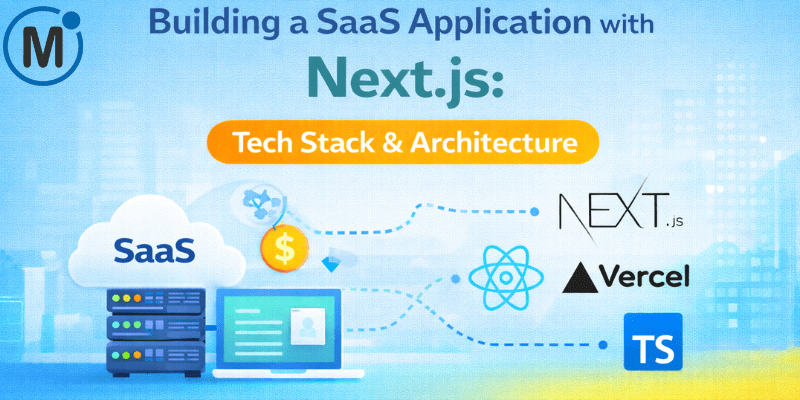
Software as a Service (SaaS) products demand scalability, performance, and a smooth user experience. 𝗡𝗲𝘅𝘁.𝗷𝘀 has emerged as a popular framework for building modern SaaS applications because it combines frontend and backend capabilities with performance-first features. This blog explores the ideal tech stack and architecture for building a SaaS application using Next.js.
𝗪𝗵𝘆 𝗖𝗵𝗼𝗼𝘀𝗲 𝗡𝗲𝘅𝘁.𝗷𝘀 𝗳𝗼𝗿 𝗦𝗮𝗮𝗦?
Next.js offers server-side rendering, static generation, and server components, making it ideal for SEO-friendly and high-performance applications. Its full-stack capabilities allow teams to build, deploy, and scale SaaS products faster with fewer tools and less complexity.
𝗖𝗼𝗿𝗲 𝗧𝗲𝗰𝗵 𝗦𝘁𝗮𝗰𝗸 𝗳𝗼𝗿 𝗮 𝗡𝗲𝘅𝘁.𝗷𝘀 𝗦𝗮𝗮𝗦
𝟭. 𝗙𝗿𝗼𝗻𝘁𝗲𝗻𝗱 𝗟𝗮𝘆𝗲𝗿
Next.js handles routing, layouts, and rendering using the App Router. React Server Components reduce client-side JavaScript, improving performance. Tailwind CSS or similar utility-first frameworks are commonly used for fast, consistent UI development.
𝟮. 𝗕𝗮𝗰𝗸𝗲𝗻𝗱 & 𝗔𝗣𝗜 𝗟𝗮𝘆𝗲𝗿
Next.js API Routes or Server Actions manage backend logic such as authentication, subscriptions, and data mutations. This eliminates the need for a separate backend service in many cases, keeping the architecture simple and maintainable.
𝟯. 𝗗𝗮𝘁𝗮𝗯𝗮𝘀𝗲 & 𝗢𝗥𝗠
A scalable SaaS requires a reliable database. PostgreSQL is a common choice, paired with an ORM like Prisma for type-safe database access, migrations, and schema management.
𝟰. 𝗔𝘂𝘁𝗵𝗲𝗻𝘁𝗶𝗰𝗮𝘁𝗶𝗼𝗻 & 𝗔𝘂𝘁𝗵𝗼𝗿𝗶𝘇𝗮𝘁𝗶𝗼𝗻
Authentication is a core SaaS requirement. Solutions like OAuth-based authentication or managed auth providers integrate smoothly with Next.js. Role-based access control ensures secure access to features and data.
𝟱. 𝗣𝗮𝘆𝗺𝗲𝗻𝘁𝘀 & 𝗦𝘂𝗯𝘀𝗰𝗿𝗶𝗽𝘁𝗶𝗼𝗻𝘀
For SaaS monetization, payment gateways like Stripe are often used to handle subscriptions, billing cycles, and invoices. Webhooks can be processed via API Routes or Server Actions.
𝗔𝗿𝗰𝗵𝗶𝘁𝗲𝗰𝘁𝘂𝗿𝗲 𝗢𝘃𝗲𝗿𝘃𝗶𝗲𝘄
A typical Next.js SaaS follows a modular architecture:
* 𝗣𝗿𝗲𝘀𝗲𝗻𝘁𝗮𝘁𝗶𝗼𝗻 𝗟𝗮𝘆𝗲𝗿: App Router, layouts, and UI components
* 𝗕𝘂𝘀𝗶𝗻𝗲𝘀𝘀 𝗟𝗼𝗴𝗶𝗰 𝗟𝗮𝘆𝗲𝗿: Server Actions and API Routes
* 𝗗𝗮𝘁𝗮 𝗟𝗮𝘆𝗲𝗿: Database, ORM, and caching
* 𝗜𝗻𝗳𝗿𝗮𝘀𝘁𝗿𝘂𝗰𝘁𝘂𝗿𝗲 𝗟𝗮𝘆𝗲𝗿: Deployment, monitoring, and scaling
This layered approach improves maintainability and scalability as the product grows.
𝗣𝗲𝗿𝗳𝗼𝗿𝗺𝗮𝗻𝗰𝗲 & 𝗦𝗰𝗮𝗹𝗮𝗯𝗶𝗹𝗶𝘁𝘆
Caching, incremental static regeneration, and edge rendering help SaaS apps handle traffic spikes efficiently. Since Next.js supports serverless deployments, scaling becomes automatic without complex infrastructure management.
𝗖𝗼𝗻𝗰𝗹𝘂𝘀𝗶𝗼𝗻
Building a SaaS application with Next.js provides a strong foundation for performance, scalability, and developer productivity. With the right tech stack and a well-structured architecture, teams can create robust SaaS products that are ready to grow and adapt in a competitive market.
If you are looking for any services related to Website Development, App Development, Digital Marketing and SEO, just email us at nchouksey@manifestinfotech.com
𝐅𝐨𝐥𝐥𝐨𝐰 𝐔𝐬:
𝐋𝐢𝐧𝐤𝐞𝐝𝐢𝐧: linkedin.com/company/manifestinfotech
𝐅𝐚𝐜𝐞𝐛𝐨𝐨𝐤: facebook.com/manifestinfotech/
𝐈𝐧𝐬𝐭𝐚𝐠𝐫𝐚𝐦: instagram.com/manifestinfotech/
𝐓𝐰𝐢𝐭𝐭𝐞𝐫: twitter.com/Manifest_info
#NextJS #SaaSDevelopment #FullStackDevelopment #WebArchitecture #TechStack #ReactJS #ModernWebDevelopment #ServerComponents #NextJSAppRouter #JavaScript #StartupTech #ScalableApps #CloudDevelopment #WebDevelopers